Hi, Continue visiting your profile
user

Login

Email

Password

Create account
Forget password
AnyGenes
  • email login

Inflammation Signaling Pathways – Functions, Disease Implications and Biomarker Analysis

What are inflammation signaling pathways?

Inflammation signaling pathways are interconnected molecular cascades that coordinate the immune system’s response to infection, tissue injury, and cellular stress. These pathways translate extracellular danger signals into transcriptional programs that regulate cytokine production, immune cell activation, tissue repair, and resolution of inflammation.

Physiological inflammation is essential for host defense and homeostasis. However, persistent or dysregulated inflammatory signaling drives the development of numerous chronic diseases, including autoimmune disorders, cancer, cardiovascular diseases, and neurodegenerative conditions.

AnyGenes Inflammation Pathways qPCR Array for precise gene expression analysis.

Inflammatory pathway activity can be effectively studied through targeted gene expression analysis, enabling the identification of disease-associated biomarkers and therapeutic targets.

Key takeaways

  • Central regulators of innate and adaptive immune responses
  • Control cytokine production, immune activation, and tissue repair
  • Operate through tightly regulated signaling cascades
  • Chronic activation drives inflammatory and immune-mediated diseases
  • Highly suitable for biomarker discovery and gene expression profiling

Major inflammation signaling pathways

Inflammatory responses are orchestrated by a network of core signaling pathways:

NF-κB signaling pathway

  • Master regulator of inflammation
  • Induces cytokines, chemokines, and survival genes
  • Central to chronic inflammatory diseases and cancer

MAPK signaling pathway

  • Mediates responses to stress, cytokines, and growth factors
  • Regulates inflammation, apoptosis, and cell differentiation

JAK-STAT signaling pathway

  • Transduces cytokine and interferon signals
  • Controls immune cell activation and differentiation

Toll-like receptor (TLR) signaling pathway

  • Detects microbial and danger-associated molecular patterns
  • Initiates innate immune and inflammatory responses

Inflammasome signaling

  • Activates caspase-1 and IL-1β / IL-18 production
  • Plays a key role in sterile inflammation and autoinflammatory diseases

Together, these pathways form an integrated inflammatory signaling network.

Acute versus chronic inflammatory signaling

Acute inflammation

  • Rapid and self-limiting response
  • Eliminates pathogens and initiates tissue repair
  • Characterized by transient activation of NF-κB, MAPK, and cytokine signaling

Chronic inflammation

  • Persistent activation of inflammatory pathways
  • Leads to tissue damage and disease progression
  • Associated with metabolic disorders, autoimmune diseases, and cancer

Failure to resolve inflammatory signaling is a hallmark of chronic pathology.

Inflammation signaling pathways in disease

Infectious diseases

Efficient inflammatory signaling is required for pathogen clearance, while excessive activation can cause tissue damage.

Autoimmune and inflammatory disorders

Chronic activation contributes to:

  • Rheumatoid arthritis
  • Inflammatory bowel disease
  • Psoriasis
  • Asthma

Cancer

Inflammatory signaling promotes:

  • Tumor cell survival
  • Angiogenesis
  • Immune evasion
  • Metastatic progression

Neurodegenerative and cardiovascular diseases

Inflammation drives:

  • Neuroinflammation and neuronal damage
  • Atherosclerosis and cardiac dysfunction

Therapeutic targeting of inflammation signaling pathways

Inflammation pathways represent major therapeutic targets:

  • NF-κB and MAPK inhibitors in autoimmune diseases and cancer
  • Cytokine blockers (e.g. anti-TNF, anti-IL-6 therapies)
  • JAK inhibitors for immune-mediated disorders
  • Emerging therapies targeting inflammasome activation

Precise molecular profiling is essential to guide targeted interventions.

Why study inflammation signaling pathways with AnyGenes?

At AnyGenes®, we provide high-performance qPCR arrays and customizable SignArrays® designed for inflammation signaling pathway analysis and biomarker discovery.

Our solutions enable researchers to:

  • Quantify inflammatory gene expression signatures
  • Analyze pathway cross-talk (NF-κB, MAPK, JAK-STAT, TLR)
  • Identify disease-associated inflammatory biomarkers
  • Generate robust, reproducible, publication-ready data

Inflammation signaling pathway biomarker analysis with AnyGenes®

What can be analyzed?

  • Cytokines and chemokines
  • Transcription factors and signaling mediators
  • Innate and adaptive immune markers
  • Disease-associated inflammatory gene signatures

Available solutions

  • Pre-designed Inflammation Pathway qPCR Arrays
  • Fully customizable SignArrays®

Expert support for experimental design and data interpretation

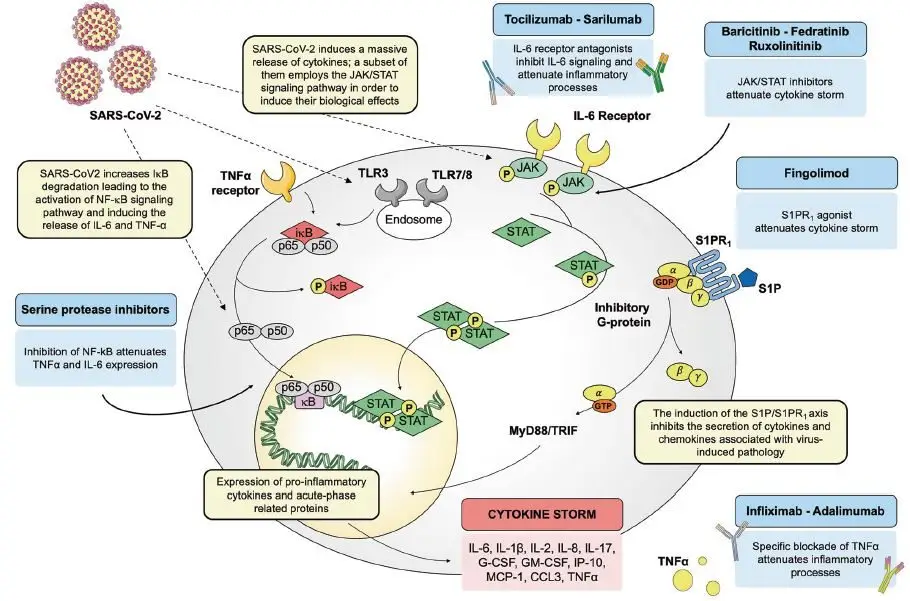
Schematic representation of SARS-CoV-2-driven signaling pathways and potential drug targets.

Customize your own signaling pathways (SignArrays®) with the factors of your choice!
Simply download and complete our Personalized SignArrays® information file and send it at [email protected] to get started on your project.

Frequently asked questions (FAQ)

They are molecular signaling cascades that regulate immune activation, cytokine production, and tissue responses to injury or infection.

Key pathways include NF-κB, MAPK, JAK-STAT, Toll-like receptor signaling, and inflammasome pathways.

Acute inflammation is rapid and protective, while chronic inflammation is persistent and contributes to disease development.

Persistent inflammatory signaling drives autoimmune disorders, cancer, cardiovascular diseases, and neurodegeneration.

By measuring the expression of pathway regulators and downstream targets using targeted gene expression approaches such as qPCR pathway arrays.

  1. Miguel Lourenço Varela et al. Acute Inflammation and Metabolism. Inflammation. (2018);41(4):1115-1127.
  2. Yu W, et al. Advances in T Cells Based on Inflammation in Metabolic Diseases. Cells. (2022)10;11(22):3554.
  3. Luis F García. Immune Response, Inflammation, and the Clinical Spectrum of COVID-19. Front Immunol. (2020);11:1441.
  4. Michele Catanzaro et al. Immune response in COVID-19: addressing a pharmacological challenge by targeting pathways triggered by SARS-CoV-2. Signal Transduct Target Ther. (2020);5(1):84.
  5. Ning Yuan et al. Inflammation-related biomarkers in major psychiatric disorders: a cross-disorder assessment of reproducibility and specificity in 43 meta-analyses. Transl Psychiatry. (2019);9(1):233.
  6. Estella A Newcombe et al. Inflammation: the link between comorbidities, genetics, and Alzheimer’s disease. J Neuroinflammation. 2018;15(1):276.
  7. Christina H Liu et al. Biomarkers of chronic inflammation in disease development and prevention: challenges and opportunities. Nat Immunol. 2017;18(11):1175-1180.
  8. Peter Libby and Sebastian Kobold. Inflammation: a common contributor to cancer, aging, and cardiovascular diseases—expanding the concept of cardio-oncology. Cardiovasc Res. 2019;115(5): 824–829.
  9. Zarrin AA, et al. Kinase inhibition in autoimmunity and inflammation. Nat Rev Drug Discov. (2021);20(1):39-63.

Inflammation signaling pathway biomarker list

You can check the biomarker list included in this pathway, see below:

Looking for more answers? Visit our Help & FAQ section to find detailed information about our products, services, and technical support.

For more information on prices, please contact us at: